Superficial Equality: LGBTQ+ Mental Health Crisis Reveals Lack of Thai Acceptance
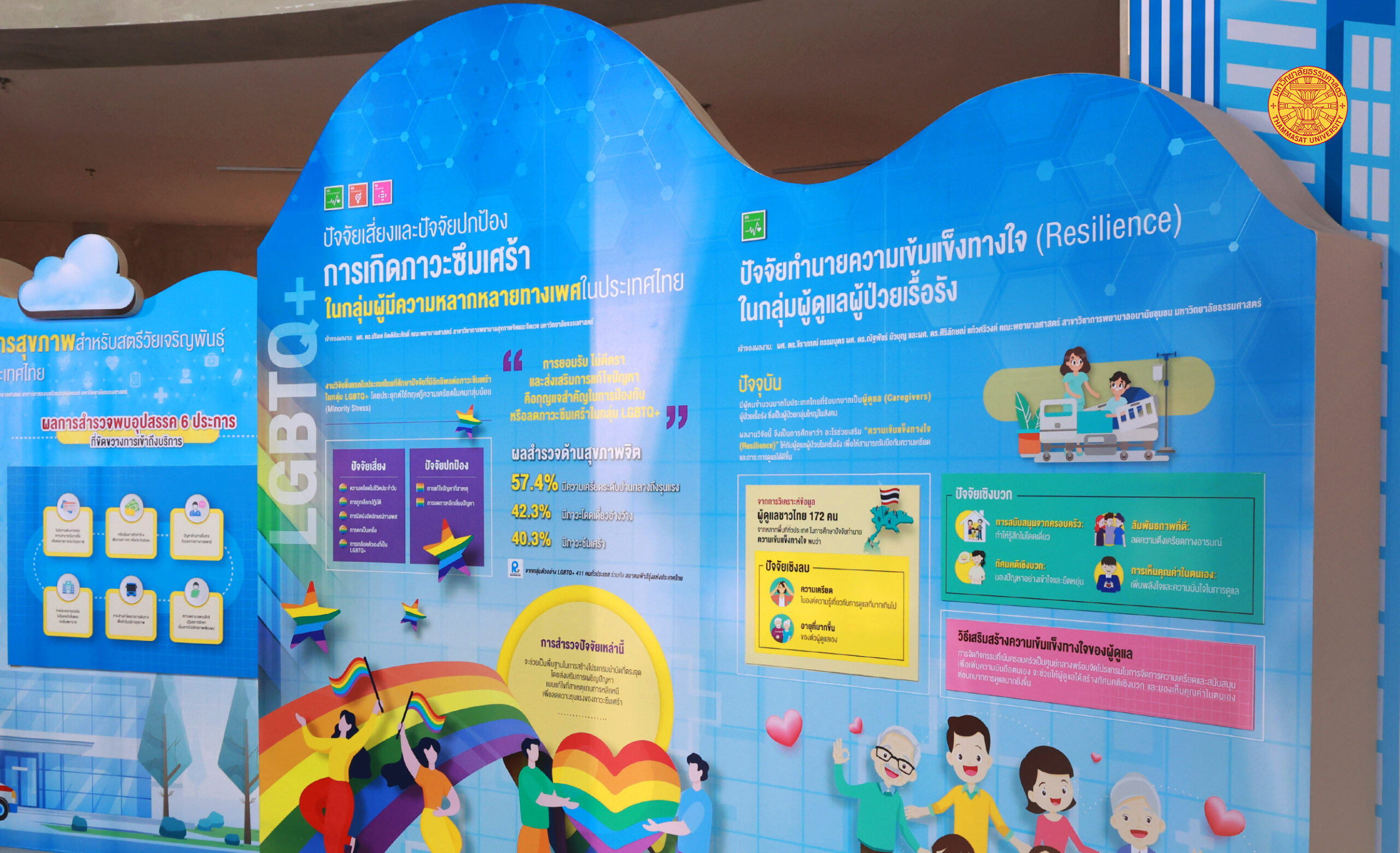
Open data from a study on risk and protective factors for depression in Thailand’s LGBTQ+ community was presented at the 3rd SDGs Exhibition, Health Sciences Sector.
Thai drag queen, Gawdland (24-year-old Tharathep Thaweephon), recently made history as the first Thai and Asian winner of “RuPaul’s Drag Race: UK vs the World” Season 3. The overwhelmingly positive reaction reflects a degree of success and acceptance for the LGBTQ+ community in Thai society, although significant challenges persist despite the praise and statistical acceptance.
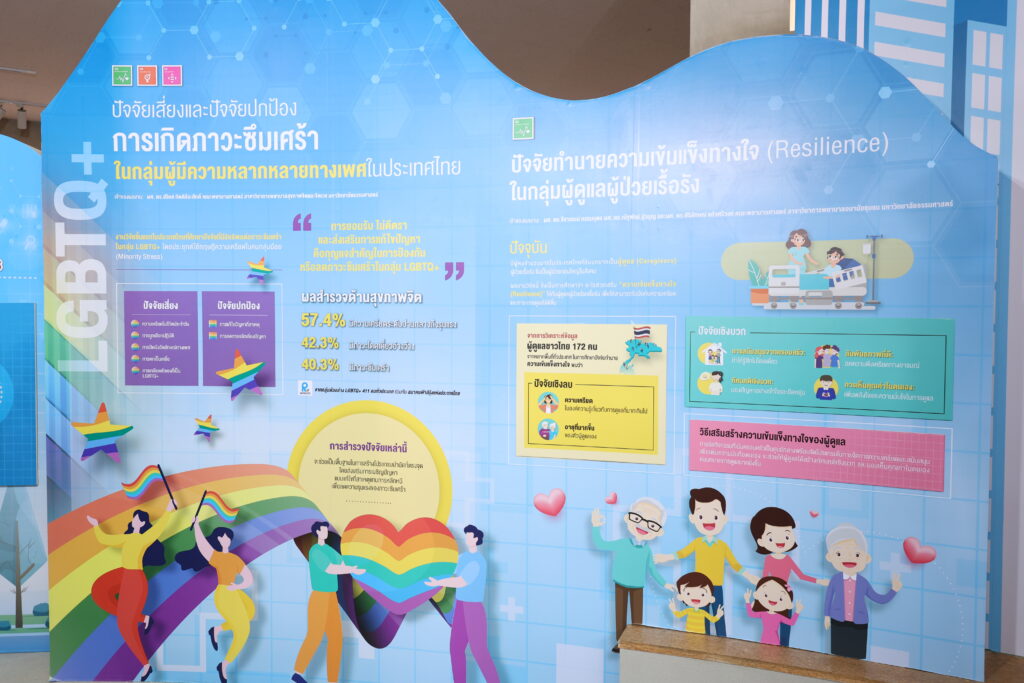
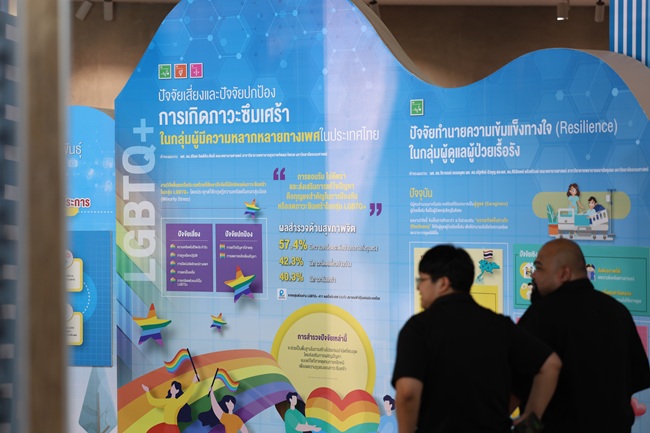
A study on Risk and Protective Factors for Depression Among LGBTQ+ Individuals in Thailand, led by Asst. Prof. Dr. Priyoth Kittiteerasack of Thammasat University’s Faculty of Nursing, revealed high mental health issues in a sample of 411 LGBTQ+ individuals (aged 18+). Results showed 57.4% had moderate to severe stress, 42.3% reported loneliness, 40.3% were depressed, and 39% had suicidal thoughts.
The risk factors contributing to mental health issues among the LGBTQ+ community in Thailand can be categorized into two groups: 1. General daily life stress, and 2. Stress arising specifically from being LGBTQ+, which includes experiences of discrimination, the necessity to conceal one’s sexual identity, victimization, and self-hatred associated with being LGBTQ+.
Despite Thailand’s outward openness, including equal marriage laws, LGBTQ+ individuals face limited acceptance and stress, leading to mental health issues. Discrimination persists, notably with the Red Cross refusing blood donations from men who have sex with men (citing safety, but perceived as discrimination), and in the workplace. Professions like law enforcement, military, and politics still lack diverse sexual representation, which is predominantly confined to fields like beauty and aesthetics.
In less open, typically rural areas, LGBTQ+ individuals often resort to “the concealment of sexual identity,” such as cutting long hair when visiting family, suppressing their true selves and causing stress. Additionally, they face “victimization,” including physical and psychological abuse—such as physical violence and verbal insults from parents—leading to self-hatred. These experiences contribute significantly to mental health issues.
“The openness and acceptance of LGBTQ+ individuals in Thai society is often perceived as equality. However, when engaging in conversations with people from diverse sexual orientations, it becomes evident that there are still numerous issues that highlight their lack of equality compared to others in society. For instance, in hospitals, transgender individuals are required to recuperate in wards that correspond to their assigned gender at birth, rather than their gender identity, which can lead to discomfort,” Asst. Prof. Dr. Priyoth stated.
Two solutions are proposed: 1. Self-Problem Solving, encouraging LGBTQ+ individuals to confront issues rather than avoid them, which improves mental health and reduces depression. 2. Creating a supportive environment through understanding diverse sexual orientations, from legal policy to the educational sector. Thammasat University suggests incorporating LGBTQ+ topics into health education curricula alongside sex education. This teaches students about sexual diversity, including the difference between “gender identity” and “gender expression,” fostering the understanding that differing from one’s assigned sex at birth is a normal preference, not grounds for judgment or stigma. This foundational understanding among youth will lead to a safer society for LGBTQ+ individuals.
Beyond formal education for children, adult awareness is crucial, potentially integrated into related master’s programs. Additionally, indirect public knowledge is vital, disseminated through various media like TV, radio, seminars, or Pride parades. These efforts will gradually raise public awareness and transform society.