Mental Health Support Model to Students in Tough Settings
High competition causes chronic stress, leading to pressure, exhaustion, and defining the current time as “The Burnout Society.”

Chronic stress from high competition leads to pressure and exhaustion in the pursuit of dreams. The current atmosphere is defined as The Burnout Society or the era of burnout. External pressures, such as the threat of war and rapid technological change, exacerbate existing feelings of life’s burdens, despite a feeling of internal lightness, and severely impact employment. This stress extends to higher education institutions and schools, with many students experiencing emotional distress. A 2022 survey by TUN-HPN of 9,050 students found that around 40% experience frequent stress. Additionally, almost one in three reported sadness, 12% had self-harmed, 4% contemplated suicide, and 4.3% were diagnosed with psychiatric disorders.

Asst. Prof. Burachai Asawathaweeboon, Assistant to the Rector for Student Affairs and a faculty member in the Department of Psychology at the Faculty of Arts, Thammasat University (TU), analyzes three main factors that affect the mental health of students within the university environment: 1. The adjustment from being a student to becoming a university student, which entails increased responsibilities. 2. Relationships with various individuals, including family, friends, and professors. 3. Expectations regarding academic performance and employment opportunities after graduation. Many students enter university already managing pre-existing emotional disorders and anxiety, requiring extra support for adaptation. Others display psychiatric symptoms, such as those related to schizophrenia, which can emerge in this life stage, further complicating adjustment. Mental health issues vary widely, from manageable concerns to severe crises involving self-harm and suicidal attempts.

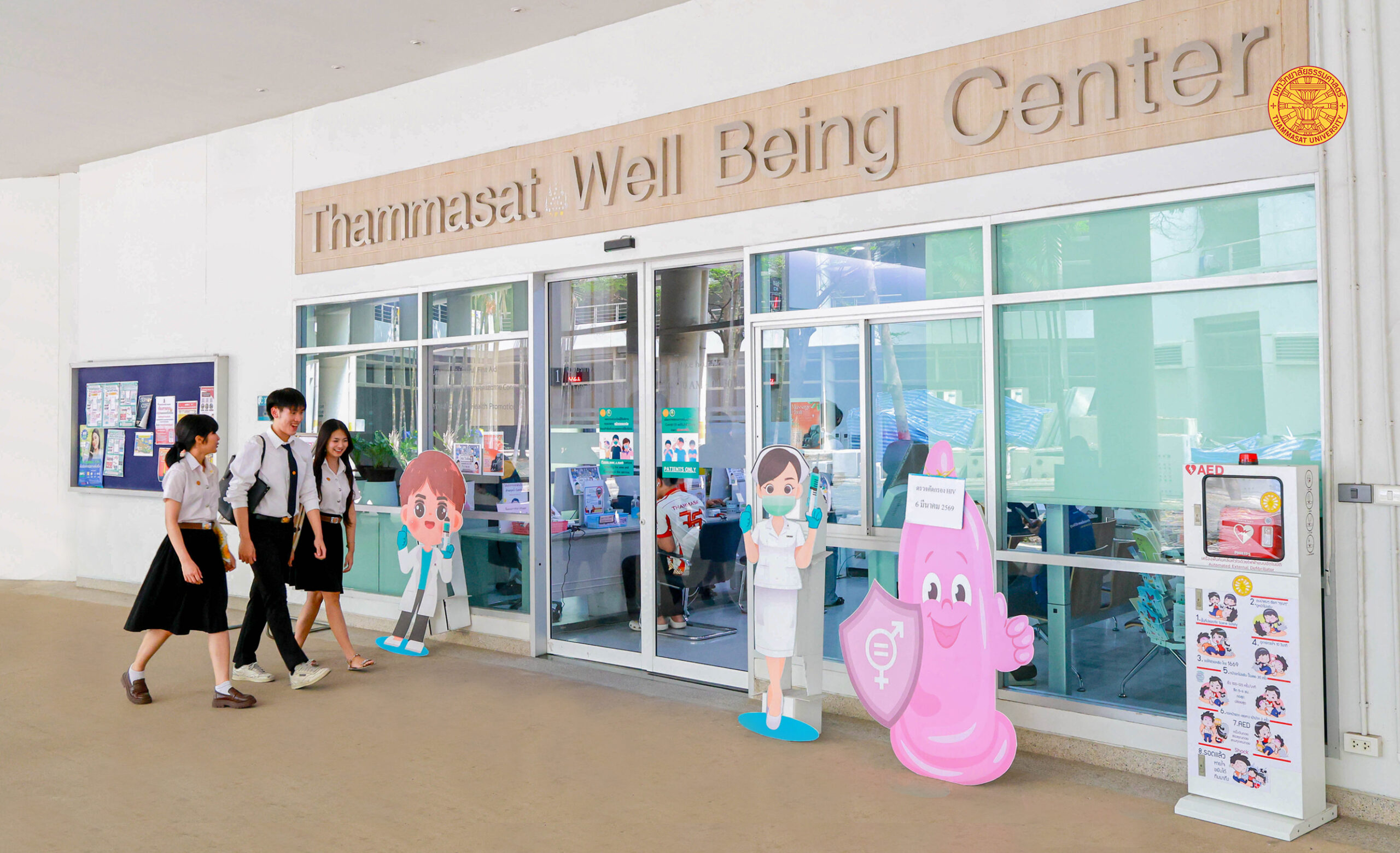
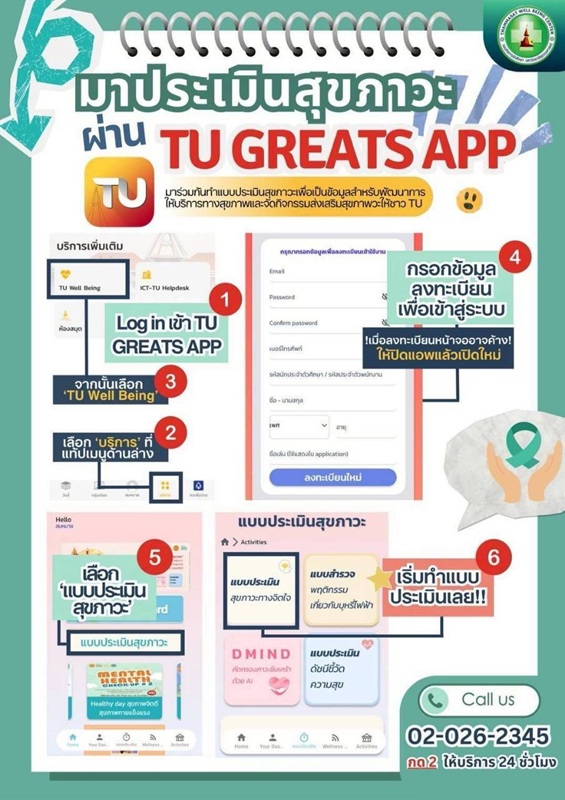
Thammasat University Counseling Center (TU Well–Being: Counseling Center) notes that student stress peaks during exams, but first-year students need extra attention due to adaptation challenges like academics, increased responsibilities, relocation, new peers, and finances, which heighten stress and anxiety. Recognizing the need for a mental health care system in education, Thammasat University, under Rector Prof. Dr. Supasawad Chardchawarn, has made this an urgent priority (Quick Big Win) for 2025-2026. The Thammasat University Mental Health Care System operates with the Thammasat Well Being Center at its core, functioning in both reactive and proactive capacities. This includes providing individual counseling, counseling through a Call Center, services by psychiatrists, treatment via telemedicine, medication management in collaboration with the Faculty of Pharmacy’s pharmacy and the Thammasat Chalermphrakiat Hospital, the development of the TU Wellness application linked to TU GREATS for self-assessing preliminary mental health issues and responding to mental health emergencies.
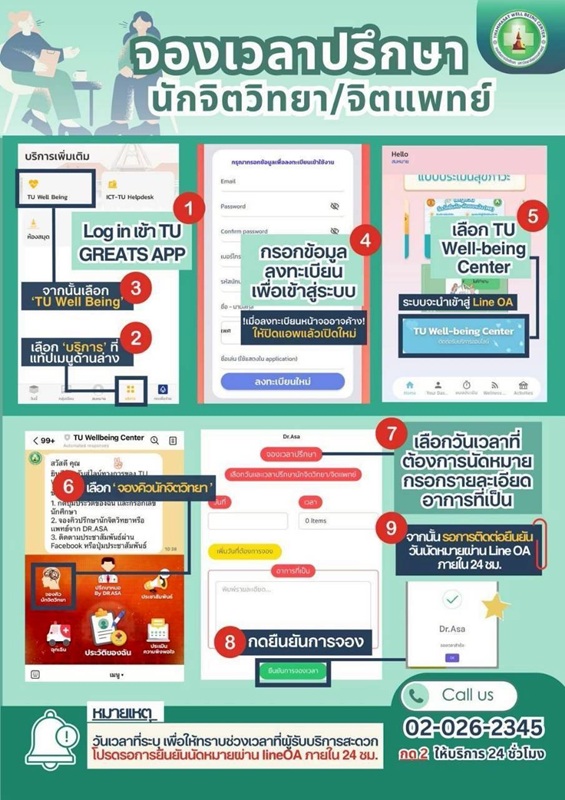
Mental health service requests take a half-day to two days, excluding optional convenient appointments. Necessary medication is available at the pharmacy or via Thammasat University Hospital for non-standard drugs. Staff includes four groups: Thammasat personnel, former student interns, current interns, and external contractors. Staffing across centers: Rangsit has one psychologist, two counselors, and three part-time psychiatrists; Tha Phra Chan has two psychologists; Lampang has two full-time and one part-time (Saturdays) psychologist; and Pattaya has one part-time psychologist (visiting every other Wednesday). As for the students who are interning and those who have already completed internships at the hospital, there are currently more than 50 individuals, making Thammasat University likely the institution with the most personnel available to provide mental health services in the country.
“Some students are reluctant to utilize the university’s system due to concerns about privacy. The university has coordinated with several hospitals to provide students with special discounts for accessing services. Students can avail themselves of services from the university’s faculties, partner organizations, or agencies that the university has arranged according to their needs. This is part of the university’s commitment to prioritizing the well-being of students,” stated Asst. Prof. Burachai.

Prof. Dr. Supasawad stated that a significant barrier preventing students from accessing mental health services is the prevailing belief that seeking mental health assessment and services is abnormal. Thammasat University is striving to communicate and instill in students the understanding that just as the body can become ill, it is entirely natural for the mind to also experience distress. Therefore, in addition to developing and preparing to provide these services, we place great importance on creating an environment that encourages students facing issues to seek help, regardless of the form it may take. With approximately 43,000 students, Thammasat sees over 6,000 annual student requests for mental health services, a number expected to grow. This rise indicates increased student awareness and easier access to services, rather than an increase in mental health issues.
“We strive to normalize the access to these services and to ensure that all students are aware that the university offers these resources for them to utilize when facing difficulties. Information about the Thammasat Well Being Center will be provided to students from the moment they enter Thammasat University during the orientation program and will continue to be disseminated across all faculties. Additionally, during the first two weeks after the semester begins, faculty members will be asked to encourage students to assess their mental health through the TU GREATS app.” stated TU Rector.