World Spins 30X Faster; Job Lifespan Capped at 10 Years, Future Government Urged to Act
Thammasat Seminar Dissects Fire Horse Year’s Economic Impact on Jobs
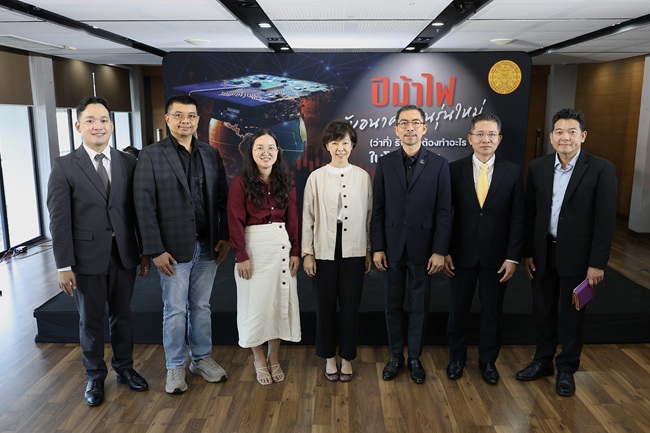
Thammasat University held a seminar on the 2026 economic outlook and its effect on employment. Economists stated that the current pace of change is thirty times faster, meaning no profession lasts over ten years, and job security is diminishing. Research confirms AI has equalized job loss risk across all professions. The solution is moving from long-term learning to Micro Learning for immediate needs. It was proposed that the incoming government financially support SMEs to offer student internships, aligning with SCG’s suggestion for the Ministry of Finance to subsidize medium-sized enterprises for this purpose. January 22nd forum, titled “Future of New Generation: What the Government Must Do in a World Where Jobs Do Not Wait for People,” aimed to address Thailand’s 2026 economic situation, political stability, geopolitical challenges, and AI’s impact on jobs, offering policy recommendations for the future government.
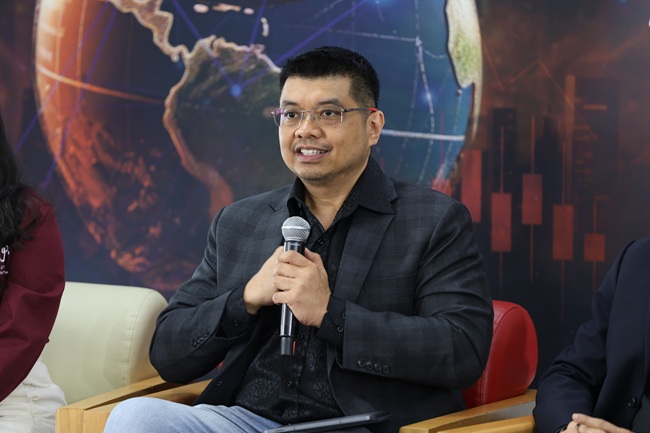
Asst. Prof. Dr. Kiatanantha Lounkaew from Thammasat University states the world’s rate of change has accelerated 30 times, meaning few professions will last over 10 years, and individuals may experience up to six career changes. This necessitates a shift from long-term education to continuous Micro Learning, Upskilling, and Reskilling. Entrepreneurs face a challenging economic environment, with only a small fraction having high financial liquidity.
In Thailand, only 15% of the workforce is prepared for the new era, far below the ideal 50% (compared to Singapore’s 50%, Germany’s 48%, and Sweden’s 42–45%). Global research shows AI risks job loss for those who rely entirely on it, but creates opportunities for those who integrate it into their work.
The government must establish a free, large-scale online learning platform for short courses to promote continuous upskilling and reskilling. Additionally, it should encourage learning through subsidized enterprise internships, covering businesses’ opportunity costs and providing student stipends. To prepare new graduates, the government should create central internship preparation centers, utilizing existing provincial or vocational institutes, to develop essential labor market skills. This should be followed by ongoing evaluations, employer matching, and an organized Internship Fair.

Mr. Metha Prapawakul of Siam Cement (SCG) attributes job position decline to fast, borderless business changes, urging the 50,000-strong, global workforce to continuously learn, adapt, think systematically, and use data. He stresses pre-workforce business understanding, citing SCG’s MOU with Thammasat University for real-world business challenges, fostering teamwork and adaptability. Large companies already have such initiatives. The government, particularly the Ministry of Finance, should financially support SMEs to accept more students for practical experience (covering allowances and training). This support is vital for business development and strengthening the national ecosystem. Concurrently, the Ministries of Labor and Digital Economy and Society must build a central platform connecting jobs, the workforce, and skill certification nationwide.
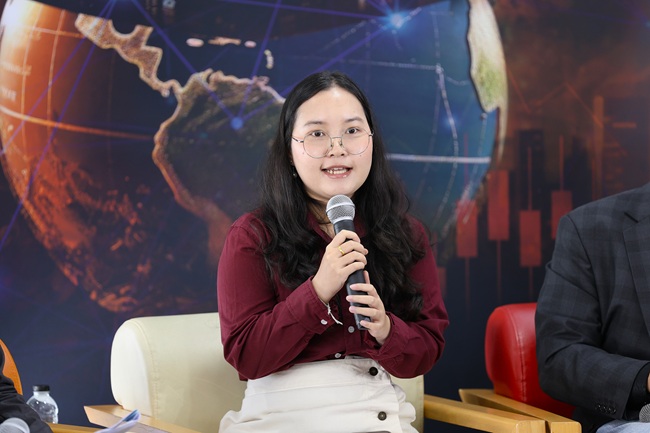
Apichaya Wittayakul, President of the Thammasat University Student Organization (TOS), stated that the new generation faces immense pressure from a poor economy, climate change, PM2.5, and flawed government, severely hindering career progression amid low salaries. He calls for government and private sector collaboration for solutions. Students, meanwhile, must develop Soft Skills, such as communication (weakened by the pandemic) and cross-generational coordination, and Hard Skills, including mastering AI use to improve work quality and learning, without over-reliance.
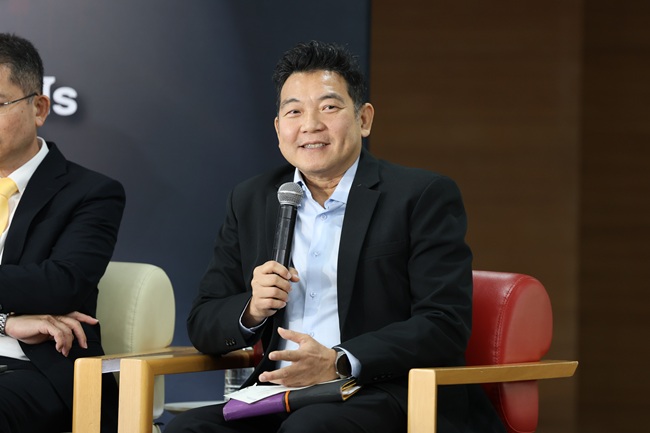
Prof. Dr. Anut Leemakdech from Thammasat University highlights three major youth challenges: 1. A rapidly aging society means fewer young people support a larger elderly population. 2. AI will eliminate many mid-level jobs. 3. Social opportunity disparities endure. He calls for government action to keep the elderly productive, revise laws to support young startups (currently favoring Singapore), and implement household reforms focusing on positive behavior, not short-sighted populist policies.
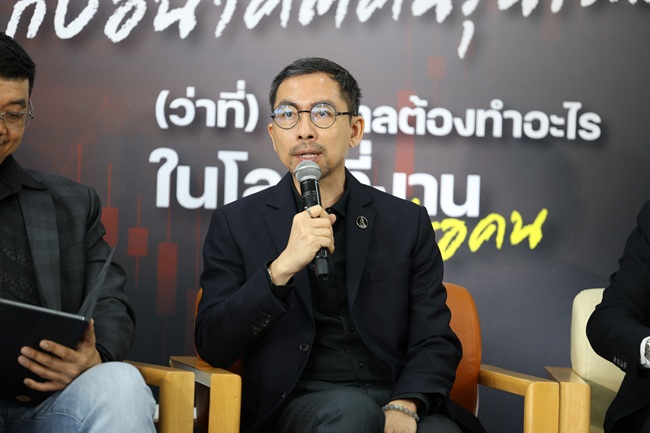
Asst. Prof. Dr. Adisorn Juntrasoon, Dean of Thammasat’s Faculty of Learning Sciences and Education, criticized Thailand’s antiquated education system, which has barely changed for centuries, focuses only on content and assessment, and ignores students’ post-graduation lives. He urged a societal discussion, emphasizing that education must adapt and institutions must see themselves as part of a wider ecosystem. Necessary changes include government decentralization of education management, budget, and oversight to prioritize child welfare, and fostering a learning ecosystem through cross-ministerial coordination (e.g., mental health when building schools) to ensure effective policy implementation.