Thammasat and UN Thailand Partner on National Volunteer Platform for SDGs
Thammasat and UN Team Partner to Boost Thai Education’s Global Role for Post–2030 Agenda
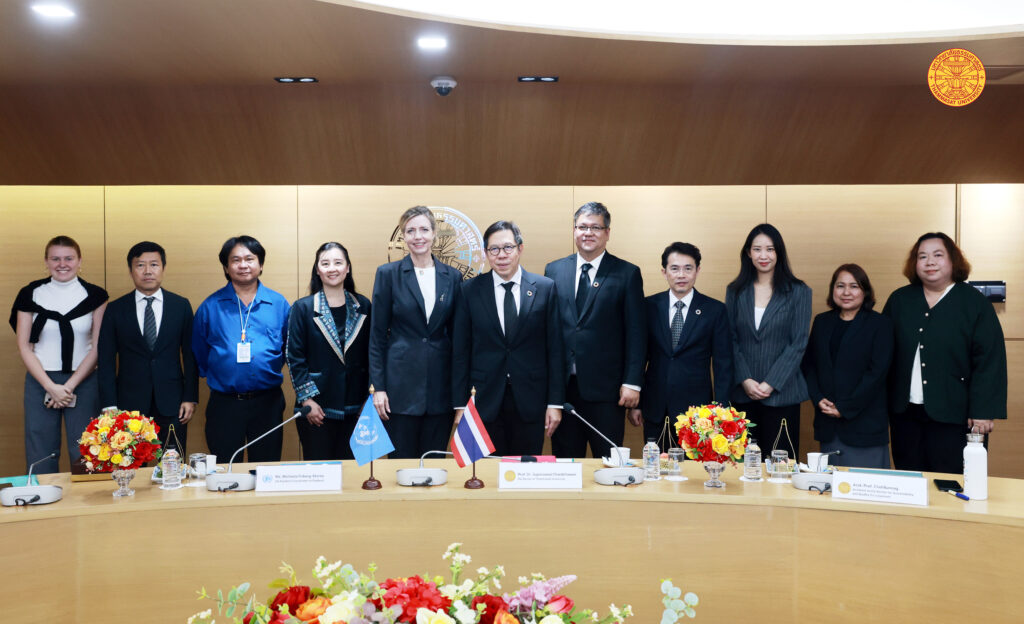
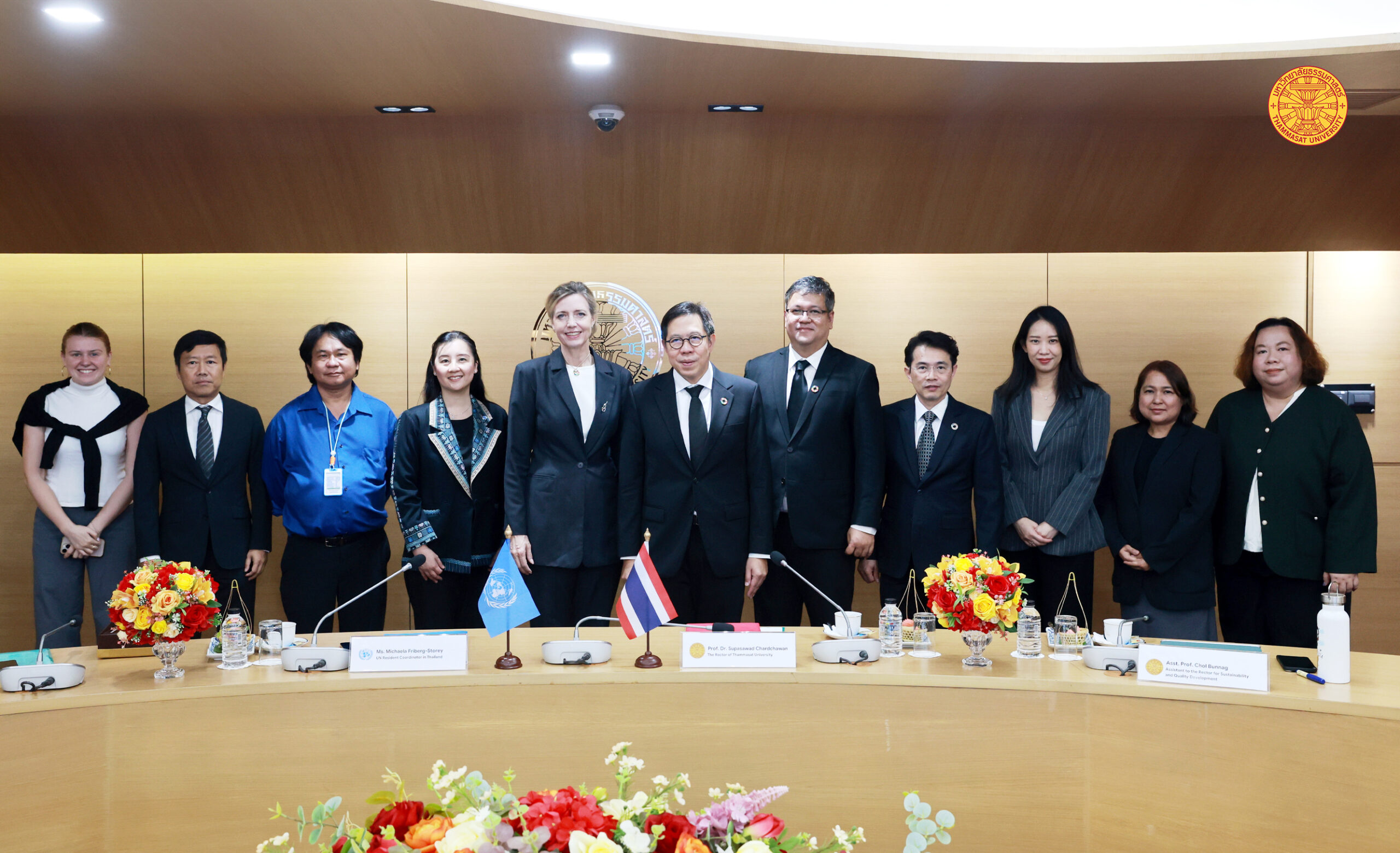
Rector of Thammasat University, Prof. Dr. Supasawad Chardchawarn, welcomed Ms. Michaela Friberg–Storey, United Nations Resident Coordinator in Thailand, along with a working group from various United Nations agencies, to discuss strategic cooperation in advancing the Sustainable Development Goals (SDGs) on February 12, 2026, at Thammasat University, Rangsit Campus.
With the participation of Asst. Prof. Chol Bunnag, Assistant to the Rector for Quality Development and Sustainability, Assoc. Prof. Dr. Dumrong Adunyarittigun, Vice Rector for Academic Affairs, Assoc. Prof. Dr. Supranee Lisawadi, Assistant to the Rector for Research and Innovation, and Assoc. Prof. Dr. Kedkun Srakawee, Dean of Puey Ungphakorn School of Development Studies.
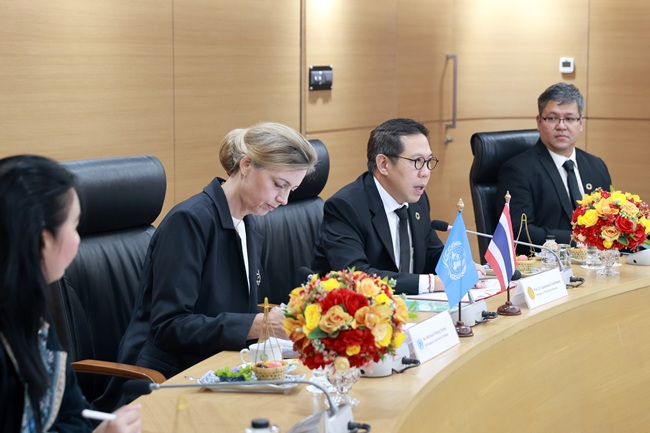
Prof. Dr. Supasawad stated that Thammasat was established as a “University for the People” based on the principles of equality, democracy, and the creation of educational opportunities. The university’s identity and mission strongly align with promoting the Sustainable Development Goals (SDGs). He also shared updates on the Bachelor of Science program in Sustainable Management, developed with the Global Compact Network. This program integrates knowledge from five faculties, Engineering, Science and Technology, Interdisciplinary College, Development Administration, and Social Work, to equip graduates for sustainable management roles in business and global organizations.
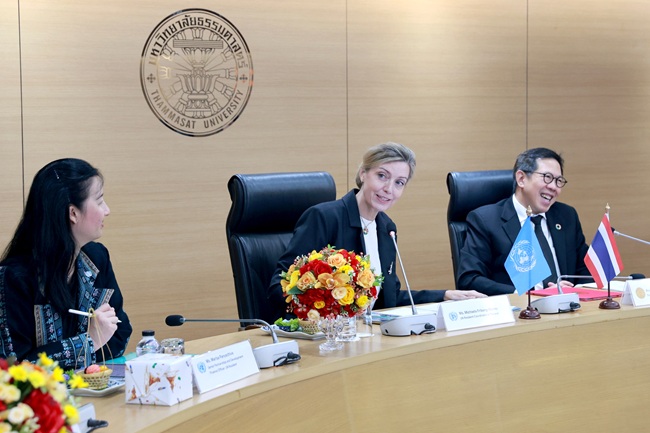
Ms. Friberg-Storey stated that Thammasat excels in translating knowledge into tangible outcomes for local communities, commending the university as a leading higher education institution that is progressive and forward-leaning, with the Sustainable Development Goals (SDGs) at the core of its operations, amidst a global context where the values of sustainability are facing challenges.
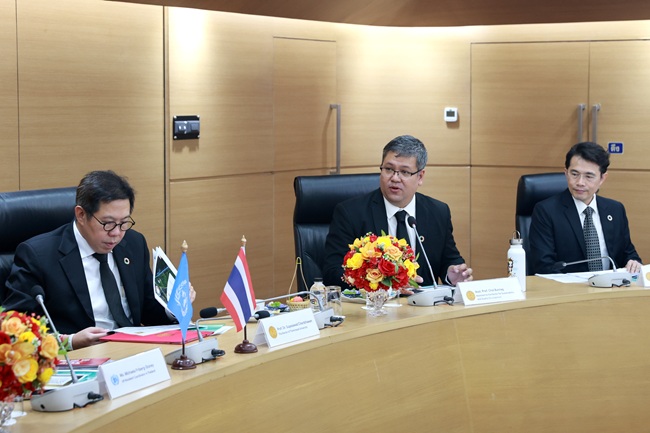
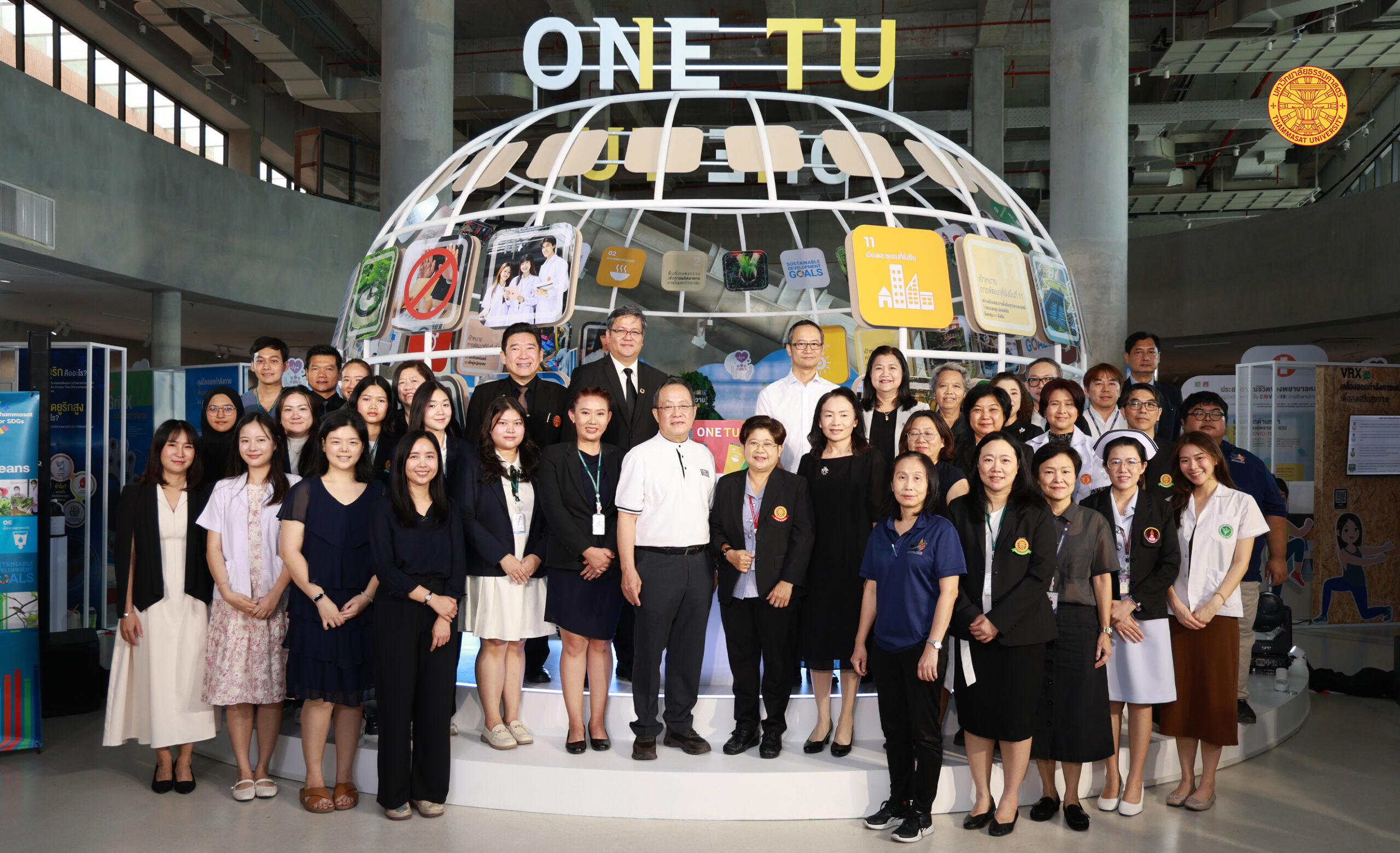
Asst. Prof. Chol presented the “One TU” vision, which aims to integrate work among faculties and reduce fragmented operations. This vision also reflects progress in advancing the Sustainable Development Goals (SDGs), including the move towards a Carbon Neutral Campus, the promotion of gender equality and diversity, as well as serving as a neutral space for peaceful political expression. This commitment has resulted in Thammasat University being ranked first in Thailand and fourth in the world for SDG 16 (Peace, Justice, and Strong Institutions) in the THE Impact Rankings 2025.
In the area of research and innovation, Assoc. Prof. Dr. Supranee discussed the support provided to researchers in creating tangible outcomes that address the Sustainable Development Goals (SDGs), particularly in the areas of health (SDG 3), innovation (SDG 9), and sustainable cities (SDG 11).
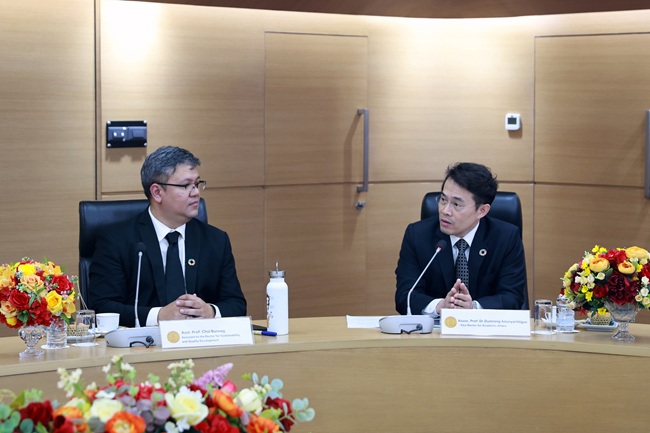
In the dimension of student development, Assoc. Prof. Dr. Dumrong presented the IMPACT model (Interpersonal, Mindful, Progressive, Agility, Competence, Thriving) to develop graduates into global citizens ready to embrace change, alongside efforts to reduce educational disparities through scholarship systems. Meanwhile, Assoc. Prof. Dr. Kedkun presented initiatives to elevate “volunteer work” into a discipline through the development of courses and knowledge frameworks to support teaching and learning.
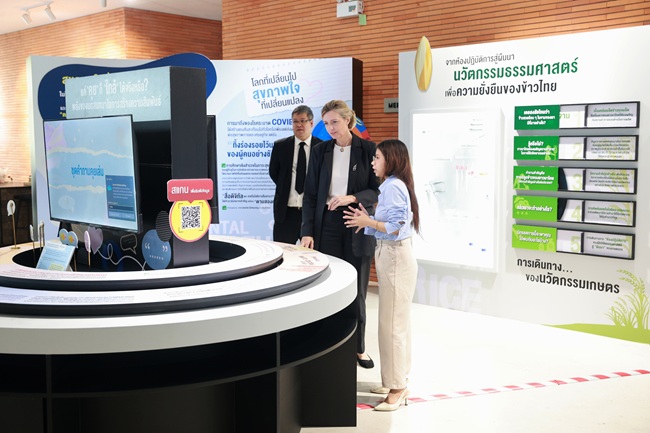
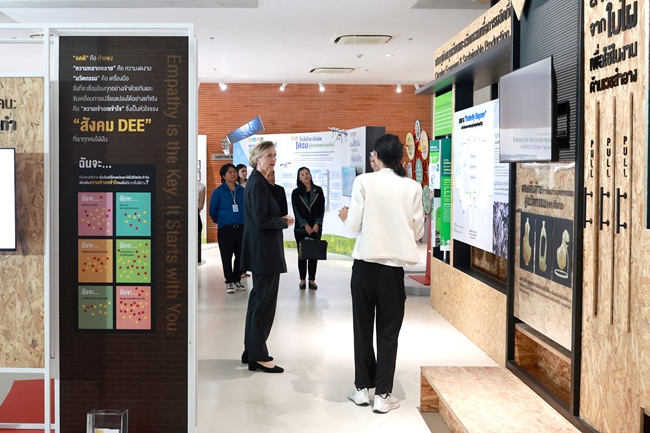
Thammasat University proposed two main collaborations with the UN: a decennial Post-2030 Agenda progress review integrating science, policy, and society (Science-Policy-Society Interface) for scenario planning and defining Thailand’s global strategies; and “Volunteerism for SDG Acceleration,” creating a National Volunteer Learning Platform and integrating volunteer work into ministry policies for structural change. The parties also discussed economic care, women in STEM, student volunteer opportunities, and inviting UN experts. This partnership makes Thammasat a national and regional UN Strategic Partner, boosting Thai higher education’s role in sustainable development and shaping the post-2030 global agenda.